Guild Of Handicraft Silver Box
.jpg "Large image of Guild of Handicraft Enamelled Silver Bowl")
Guild Of Handicraft Silver Box
- Sale Date: 26th February 2025
- Estimated Price: 500.00
- Gavel Price: £900.00
Item Description
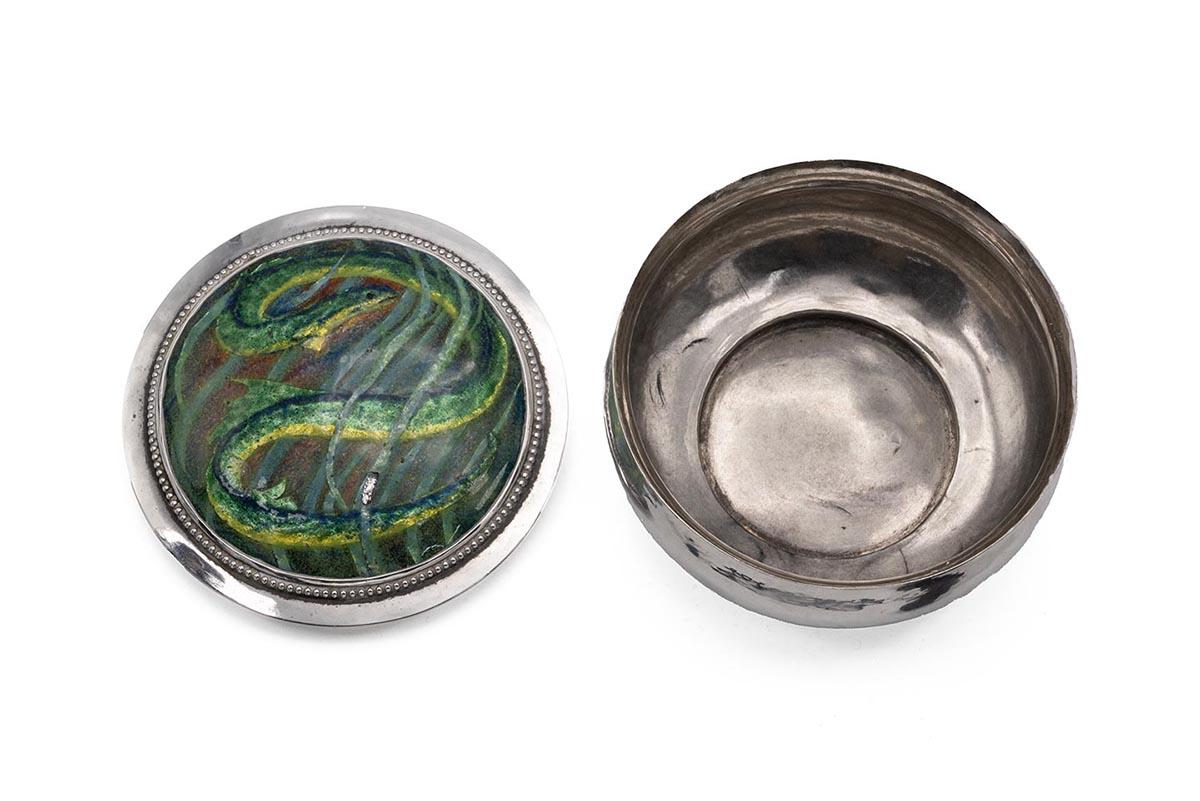
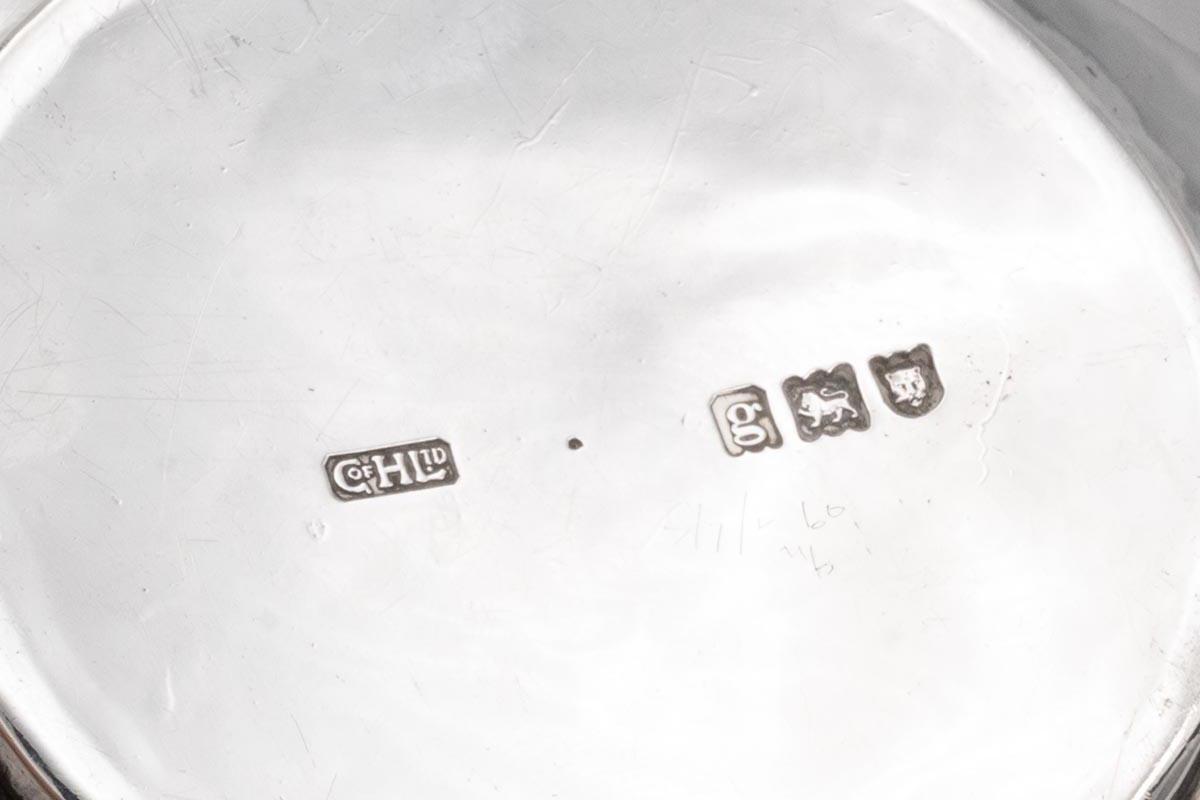
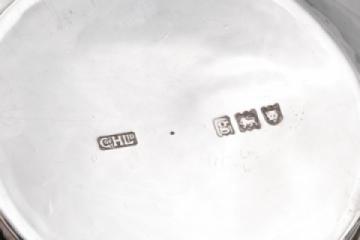
Silver Guild of Handicraft enamel bowl and lid decorated with an eel amongst weeds within a beaded frame. The enamelling probably by William Mark or Charles Fleetwood Varley, hallmarked London 1902, weight 122 grams. Widest diameter 108mm, Height 63mm.
The Legacy Of Handicraft Silver At Auction
The Arts and Crafts Movement, which rose to prominence in the late 1800s, is a design ethos based around traditional craftsmanship - not mass production, which it was founded in keen rejection of. Arts and Crafts pieces remain popular today, with antique examples routinely demanding competitive bidding at auction. Among the most popular Arts and Crafts items are, unsurprisingly, those which derive from the top of the movement: the Guild of Handicraft.
This exclusive group of artisan craftsmen represented the best of the Arts and Crafts campaign against the industrialisation of production. Throughout its history, the Guild has imparted a fine nature to even the most everyday household items, lending them richness in simplicity and collectable value. One such example is a silver bowl, which RWB Auctions put under the hammer and sold at an above-estimate price of £900. This silver bowl offers a clear window into discussing the history of the Guild of Handicraft, while providing an overview of the current auction market for Arts and Crafts items. The painstaking creative techniques of enamelling and the valuation factors our experts look for will also be covered below.
The Guild Of Handicraft: A Brief History
The Guild of Handicraft was founded in 1888, during the rise of the wider Arts and Crafts movement. Its founder was Charles Robert Ashbee, a prolific architect and a foundational proponent of Arts and Crafts principles. Ashbee's Guild was nurtured in East London's Essex House, but soon, in 1902, the entire Guild and their families were moved to Chipping Camden, Gloucestershire.
The Guild of Handicraft was inescapably political. Its exports represented anti-industrialism, ethical commerce, and, through the sharing of profits among members, socialist idealism. The Guildsmen, who generally aligned closely with artistic thinkers such as William Morris, also believed strongly in the relationship between the environment and one's character. Indeed, the city's suffocating nature is what led Ashbee to move the enterprise to the Cotswolds.
Naturally, it was Charles Ashbee whose style swayed the Guild's approach to Craftsmanship. However, its success, at least at the time, would be short-lived. In 1908, continuing the Guild of Handicraft in its original form became untenable, leading to its liquidation and continuation as a private company. Overheads, economic pressures, and the realities of running the Guild from Chipping Camden all contributed to its demise. However, the renowned silversmith George Hart grasped the Arts and Crafts baton, continuing the movement - joined by many others - that Ashbee had started.
Today, the Guild of Handicraft is a byword for quality, historical significance, and bidder interest at auction. This is especially the case for silver Guild items, often characterised by the 'planished finish': the deliberate presence of hammer spots whereby the human touch is conspicuous. Similarly, the unique and highly technical nature of enamelling items characterises the ethos of the Guild. A process we will now explore further.
Enamelling In The Guild Of Handicraft
What Is Enamelling?
Enamelling is a difficult, volatile process that produces great beauty through intense heat. The artisan essentially fuses powdered glass to the metal base. In the case of the eel on our Handicraft bowl, the maker would grind the glass into a workable paste, carefully apply it to the lid, and then fire it at temperatures up to 900 degrees.
The Guild of Handicraft boasted many masterful enamel workers, who favoured specific branches of the art, such as Basse-Traille, which involved engraving the silver before applying the enamel, creating a textured surface that catches the light. Another is Champlevé: the use of powdered enamel, applied into a series of pre-etched 'cells', which are fired to be flush.
How Auction Experts Identify Makers
What makes the Guild of Handicraft so fascinating and enduringly valuable is the number of master craftsmen who each had a hand in producing its vast tangible legacy. Collectors often have knowledge of individual members and therefore seek out items produced by them. So, identifying the actual Guildsman who enamelled a particular piece can facilitate highly competitive bidding at auction!
This task is not as simple as identifying a craftsman's personal signature, which is why having one of our experts on hand offers the best chance of a credible identification. The Guild, as we know, operated as a collective, which means the company hallmark - often 'CRA' is the one to appear on most items (rather than the artisan's own mark).
So, to trace a Guild piece back to renowned enamellers such as William Mark (in the case of our silver bowl) and Arthur Cameron, we use evidence-backed diagnostic methods:
Archival Matching: Luckily, the Guild lives on through museum pieces and significant archives at the Victoria & Albert Museum and at Chipping Camden. These items include original Guildsman sketchbooks, patterns, and attempted items, which can allow decorative enamelling on the finished product to be closely matched to artists' sketches and previous work.
Signature Style: When a sketch for the piece is not available, we can use our knowledge to interrogate the craftsmanship for subtle signs of the maker's identity. For instance, the specific tonal blending techniques of one artisan will differ from another, as will the flow of the enamelling, achieved through careful movement during the firing process.
Physical Examination: If pieces can be dated to specific periods of the Guild's history, this can help to triangulate findings and narrow down the enamelling whodunnit!
Using these and other trusted techniques, our in-house expert concluded that the item was most likely to be the work of William Mark or Charles Fleetwood Varley - both storied makers. We will very happily take the same investigative lens to your Guild of Handicraft items, should you be interested in a comprehensive valuation.
Value Factors For Enamelling
1. Condition: The clarity of enamel is a key driver of auction interest and value. This fragile glasswork can be prone to hairlines, chips, or signs of failed restoration. On the flip side, those in fantastic condition will attract lots of bidding interest.
2. Design Nature: Of course, the design details are important. The Guild is perhaps most associated with natural tones and scenes rooted in the countryside and nature, especially following the Cotswolds move. Complex iconography, such as the eel we dealt with, are likely to hold the most value at auction.
3. Layering: Among the valuable enamelled items are those featuring multiple tiers on the lid or other surfaces. This additional dimension of the piece creates a beautiful depth that enthusiasts love.
The Arts And Crafts Auction Market
Today, the Guild of Handicraft lives on, with the wider Arts and Crafts movement remaining relevant and popular. For years, we have experienced the dedication of collectors from across the world when it comes to premium Guild items - and lidded enamel silver boxes certainly fall under this premium umbrella. Such items, when authenticated as Guild pieces, are granted an instant provenance back to Ashbee and his cooperative of Guildsmen. This fosters a competitive bidding environment, especially if the item features the following:
1. Stylised Finials: Semi-precious stones used to top Handicraft bowls, a practice favoured by Ashbee himself.
2. Completeness: Guild of Handicraft bowls were sometimes produced as part of a set. Matching items sold together, such as a bowl, spoon, and glass liner, are towards the very top of the silver Handicraft market.
3. 'Golden Age' Provenance: Where dating can be uncovered, those which show a year between approximately 1896 and 1906 are attractive to buyers. This is because these items belong to what is widely considered the peak period of the Guild, covering its time being based in East London as well as in Chipping Camden.
Why Are Guild of Handicraft Items Valued Highly?
Unlike many other antique pieces of silverware, Guild handicraft items are less reliant on the intrinsic value of the precious metal when determining their overall worth at auction. Collectors favour the Guild's historic output for its social and design history value. While unfortunate at the time, the Guild's relatively short period of operations has ensured that this market has remained tight ever since, meaning this restricted pool of Guild objects is sure to draw attention for many years to come.
Consign Your Arts & Crafts Silver
Do you or a loved one own a piece of the Guild of Handicraft's history? Our expert enthusiasts are always excited to see Guild items and will happily uncover the history and auction value of your item(s) with you. Contact our team today to arrange an initial valuation, with no obligation to sell.
Give our friendly Wiltshire-based team a call on 01793840777 or email our office to arrange a valuation at office@rwbauctions.com.