
JW Benson Gold Pocket Watch
.jpg "r5232 2 1200x800px")


JW Benson Gold Pocket Watch
- Sale Date: 22nd April 2026
- Estimated Price: 800.00
- Gavel Price: £950.00
Item Description
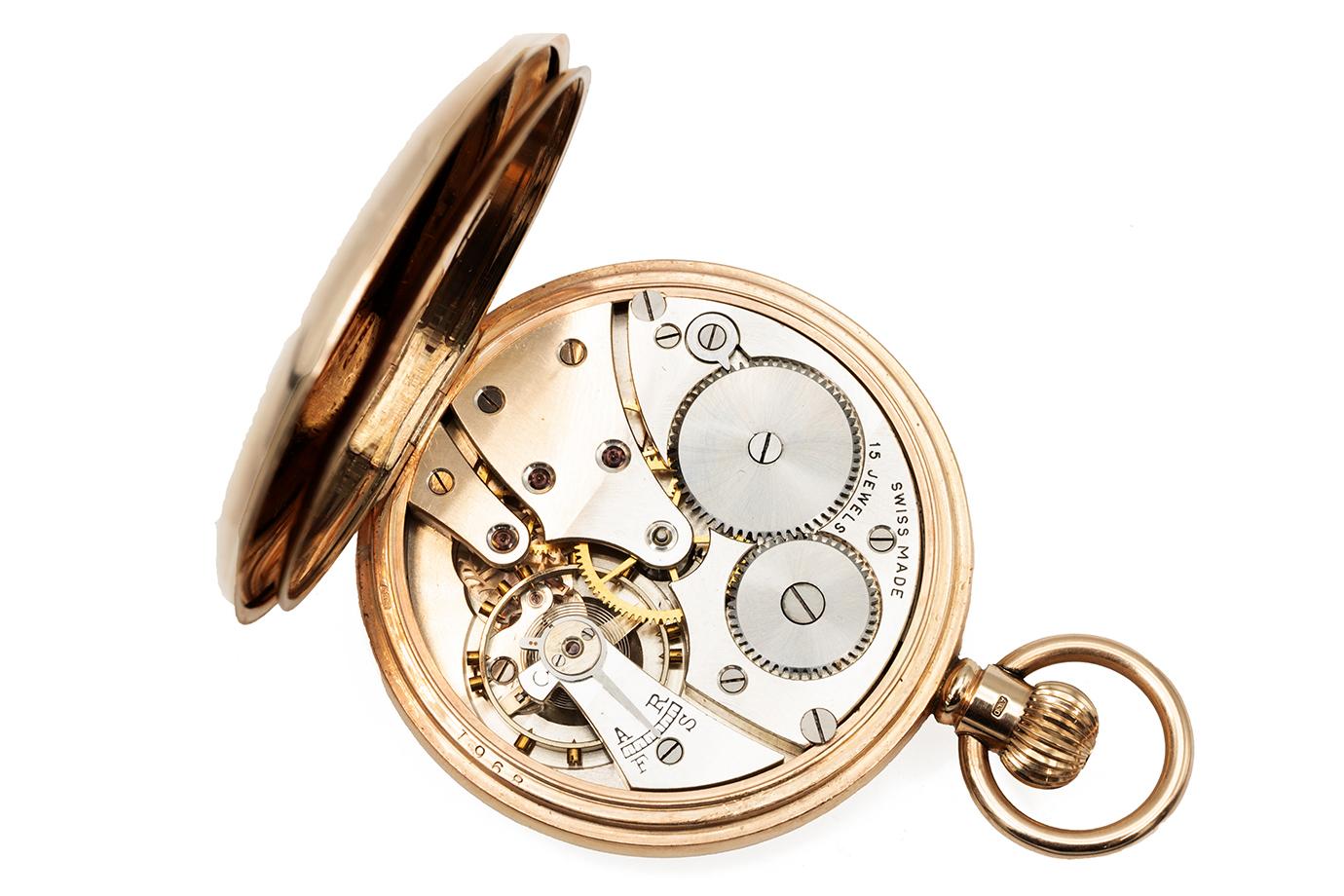
A 9-carat gold open-faced pocket watch by J.W.Benson, with a white dial, Arabic numeral increments and seconds sub dial to three, with swing loop above crown, stamped 375 and hallmarked to interior of case back, contained in a fitted case. Gross weight 88 grams.
Our Jewellery, Silver, Watches, & Coins auction, held on 22 April 2026, included a sophisticated JW Benson 9-carat gold pocket watch. The historic timepiece - lot 482 of 739 - was in fine company, and this sale in particular serves as an opportunity to explore the history of JW Benson, the beginnings of English watchmaking, and how to tell the value of an antique pocket watch.
J.W. Benson History
In the early 19th century, watchmaking was dominated by Swiss-made timepieces. London's watch industry, meanwhile, was still in its early stages of development. In response to this gap in the domestic market, brothers James William Benson and Samuel Suckley Benson set up their own London-based watchmaker and jewellery house in the middle of the century. To their pride, it was one of the first in London at the time. In 1855, however, the partnership split, leaving James to continue from the base in Cornhill under the shortened company name of JW Benson.
Success soon demanded expansion, and a new location was added on Ludgate Hill, in the grand shadow of St Paul's Cathedral. It is this Ludgate Hill address that was included inside the pocket watch's box, which RWB Auctions had the pleasure of examining. Other premises, however, were soon obtained.
As JW Benson's prestige and reputation for producing quality watches and jewellery continued to grow, its reach expanded further across Victorian London's premium shopping districts. By the end of the 19th century, JW Benson had a presence on Bond Street, in the Royal Exchange, and, of course, on wrists, necks, and pockets of many fashionable Victorian Londoners.
At the peak of its success, JW Benson was proudly bestowed numerous royal warrants. The outfit crafted pieces for Queen Victoria and the Prince of Wales (future King Edward VII). JW Benson also gained attention from further afield, with the Sultan of Johor and the Tsar of Russia favouring the London-based watchmaker.
James William Benson died in 1878, trusting the highly successful business to his sons. Their watches continued to enjoy success and demand until the main JW Benson factory was bombed during World War II.
The loss of the factory and thousands of watches within it called time on the production arm of JW Benson, leaving a considerable legacy for watchmaking that is still discussed among enthusiasts of English-made timepieces today. It is why we enjoy seeing surviving items such as the 9-carat pocket watch, which offers a beautiful, still-ticking reminder of JW Benson's storied success.
What Are Gold Pocket Watches Worth?
The pocket watch, including examples to come from the then-flourishing JW Benson, is synonymous with Victorian Britain. Their functional worth in a rapidly modernising society, where timekeeping became increasingly important, was clear. The pocket watch, however, was also a status symbol: wealthy individuals seeking to signal their wealth and class to others.
Let's discuss four key factors which determine the value of a pocket watch.
Gold Purity And Content
The function of the pocket watch as a status piece is why many, including the JW Benson which went under the hammer in our auction, are crafted with gold (the accompanying Albert chain, which secured the watch, was also an opportunity for the well-off to flaunt a hefty amount of gold). The greater the amount of gold included in the composition of your historic pocket watch, the more it may fetch at auction.
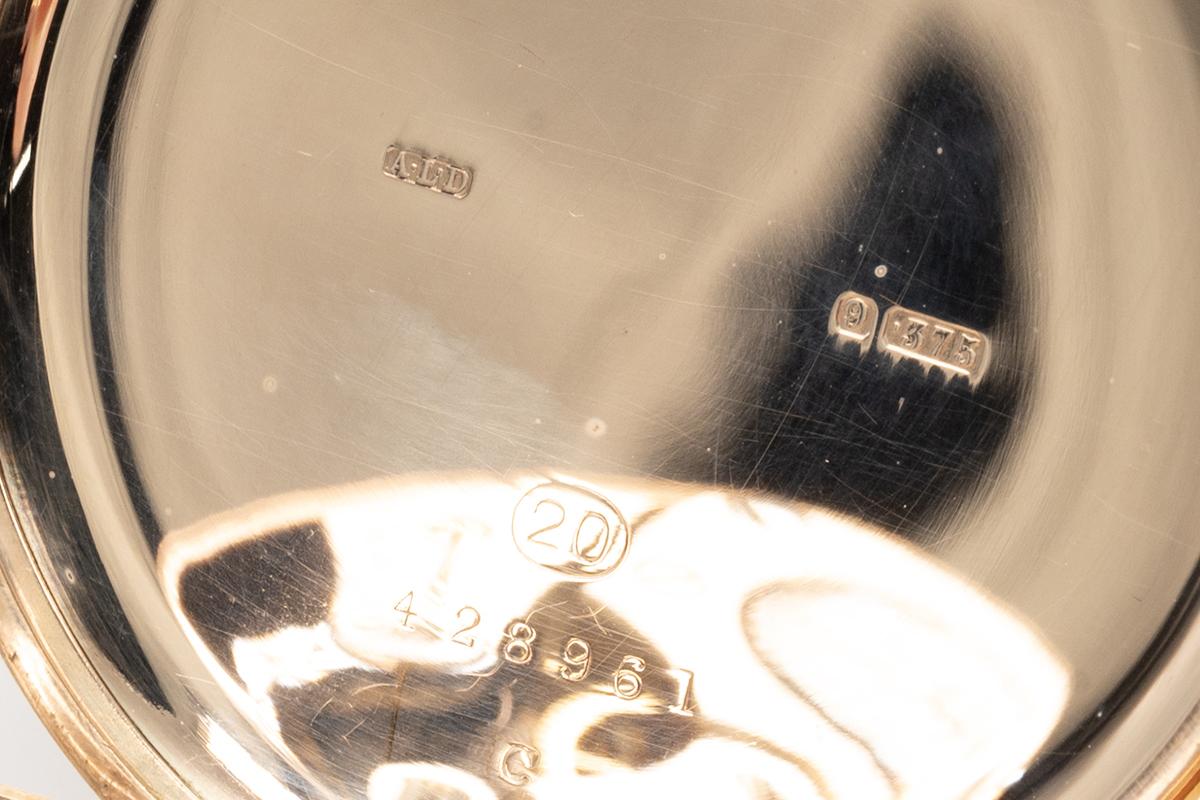
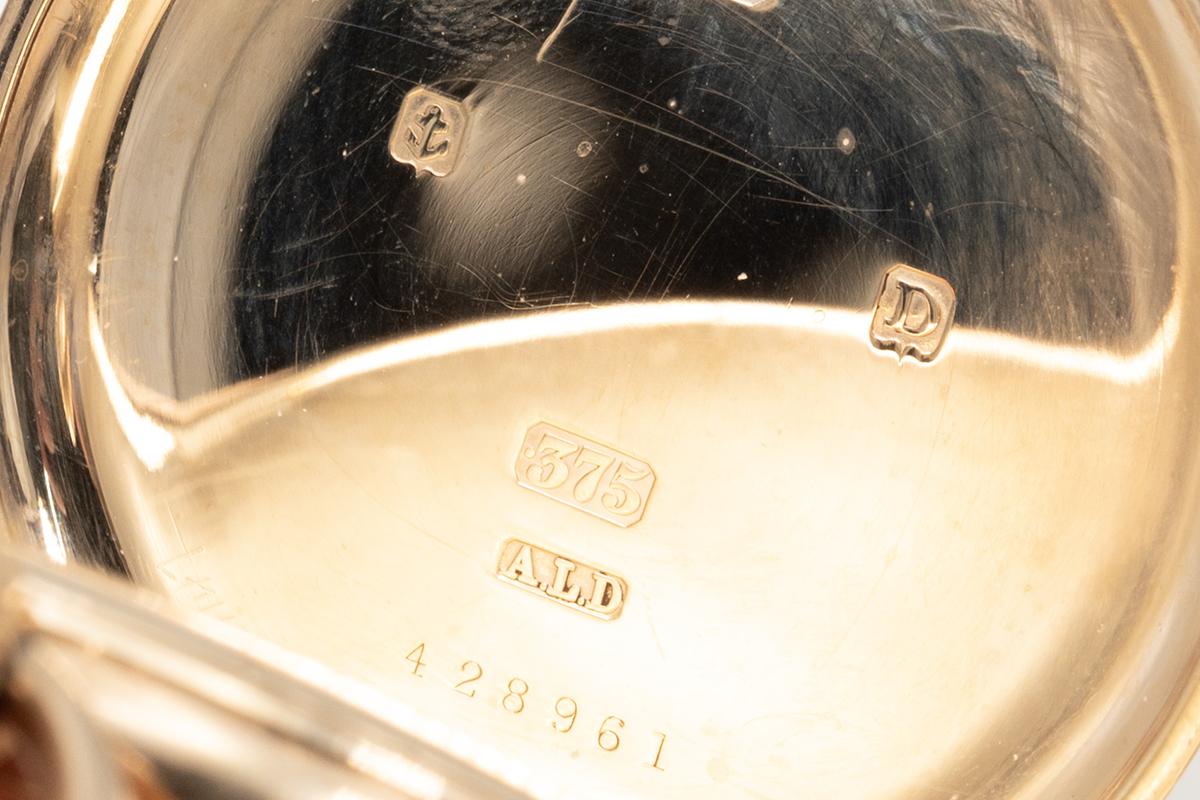
To determine how much gold is in a pocket watch, we first examine the case's hallmarks. These small stamps are added by the maker to verify the metal alloy used to make the case. Our inspection of the JW Benson piece revealed that the case was made of 9-carat gold, indicating it was 9 parts pure gold to 15 parts alloyed metals.
Because pure gold was considered too soft to withstand daily wear, antique gold pocket watches are commonly composed of alloyed gold, as per the case of our JW Benson piece.
Common purities for antique gold pocket watches include:
18-carat (75.0% pure gold): Hallmarked '.750', this increased purity is associated with higher-end pocket watches.
14-carat (58.5% pure gold): Hallmarked '.585', 14-carat gold was commonly used for American-made pocket watches.
9-carat (37.5% pure gold): Hallmarked '.375', the 9-carat pocket watch is a popular composition for British-made pieces, balancing gold content with durability and accessibility.
Our experts will be able to discover - and test to confirm - the purity of your antique pocket watch. Our checks also extend to silver pocket watches, which, despite having lower intrinsic value than their gold counterparts, remain popular at auction.
In the meantime, this online 'Hallmark Wizard' will allow you to identify the hallmarks and symbols on your watch (or other item) with just a few clicks.
Gold content, then, is an important factor in the value of your pocket watch. However, other factors of watch production can add value to a historic timepiece. One example is the 'movement'.
Movement And Mechanics
The movement of a timepiece refers to the mechanical workings of the watch. It is, essentially, what makes it tick. While many of today's watches are battery-powered, classic pieces are generally mechanical. And these mechanical movements often become more valuable and collectable when they are 'complicated', meaning the watch's beating heart is complex, sophisticated, and intricate.
Swiss-made movements, such as the one we found in the JW Benson pocket watch, are globally known for their reliability and well-built construction. JW Benson put their name to imported movements such as this one after the destruction of the factory in WWII, and the 1968 date stamp inside the case supports that the piece was produced during this later post-war period in JW Benson's history.
History And Provenance
Some pocket watches, in addition to being housed in high-purity gold cases and powered by complicated movements, also find value in their provenance (history). Pieces produced by powerhouse watchmakers, limited-edition offerings to mark key events, and those made under commission for individuals can tell a story that translates into auction success.
Many examples of provenance-rich pocket watches sold at auction exist, such as:
1. A gold pocket watch recovered from the wreck of the Titanic, belonging to Isidor Strauss. This sold for an incredible £1.78 million.
2. Winston Churchill was once gifted a Sir John Bennett pocket watch, which sold at auction for £76,000 in 2024.
3. Al Capone's Patek Philippe pocket watch was sold by Sotheby's as part of his wider estate sale, gathering significant interest based on the infamous previous owner
Of course, when it comes to provenance, documentation is important for showing the full story of your pocket watch to potential buyers.
Watchmaker Reputation
The manufacturer of your pocket watch may also be a factor in deciding its worth at auction. The watchmaker we have discussed so far (JW Benson) is a well-known manufacturer who produced many pieces for the people of London and beyond. Some pocket watches, though, are scarcer and of even more interest to collectors and enthusiasts. The following firms are characterised by their premium nature and exquisite pocket-sized timepieces:
Charles Frodsham: A high-end English firm still producing pocket and wrist watches today.
Patek Philippe: For many, the gold standard of watchmaking. Patek Philippe has made pocket watches for royalty such as Queen Victoria, as well as numerous popes and (as we saw earlier) Al Capone!
Breguet: Founded by the 'founder of modern horology', Breguet pocket watches are luxury pieces which feature foundational innovations in watchmaking.
To learn more about your gold pocket watch - be it the composition, movement, provenance, or maker - we invite you to get in touch with our experts at RWB Auctions, who will happily perform a professional evaluation of your historic timepiece.
How To Tell If A Pocket Watch Is Real Gold
Verifying the gold content of items such as a JW Benson pocket watch is a difficult, yet important, step when selling gold watches, gold jewellery, or other valuables at auction. As mentioned above, the case's hallmark(s) are a good starting point, though their presence is not always a guarantee of significant gold content.
What Does 'Gold-Filled' Mean?
Sometimes a pocket watch, or other gold item, has a mark reading 'gold-filled'. While this sounds like an indication of a case hefty with gold, it actually refers to a production process which bonds a core of base metal (for example, brass) to a layer of gold. Gold-filled pocket watches likely contain at least 5% pure gold, but will scarcely offer the gold content of comparable timepieces hallmarked and measured in karats.
How To Spot Brassing
To tell if your pocket watch is real gold rather than gold-filled or gold-plated, look for signs of abrasion: if a layer of gold has scratched away to reveal brass beneath, it is not made from a high-purity alloy. This common tell is called 'brassing'. For pocket watches specifically, a stated 20-year warranty, stamped somewhere on the piece, is a significant sign that it is a gold-filled example.
Looking To Sell A Gold Pocket Watch At Auction?
At RWB Auctions, we always inspect pocket watches that enter our auctions to give your timepiece the best chance to sell. In addition to identifying hallmarks, our specialist equipment [note: I am not sure if RWB has this tech over there] will confirm the gold content of a pocket watch, ensuring its precious-metal value is accurate. With gold prices on the rise, items such as the 9ct JW Benson pocket watch, weighing 88.00 grams, are increasingly drawing buyers' eyes! Of course, as shown above, gold content is not the only factor we will consider when valuing your pocket watch!
If you have decided that the time has come to sell your gold pocket watch at auction - perhaps it is another example of JW Benson's English craftsmanship - then feel free to contact RWB Auctions about your potential sale. Our low seller's fees ensure you keep more profit than you would with traditional auction houses.
Our team will happily take your call on 01793840777 or respond promptly to emails sent to us at office@rwbauctions.com.