Unusual 19th-Century Gold Mourning Ring
Unusual 19th-Century Gold Mourning Ring
- Sale Date: 22nd April 2026
- Estimated Price: 1,000.00
- Gavel Price: £1,100.00
Item Description
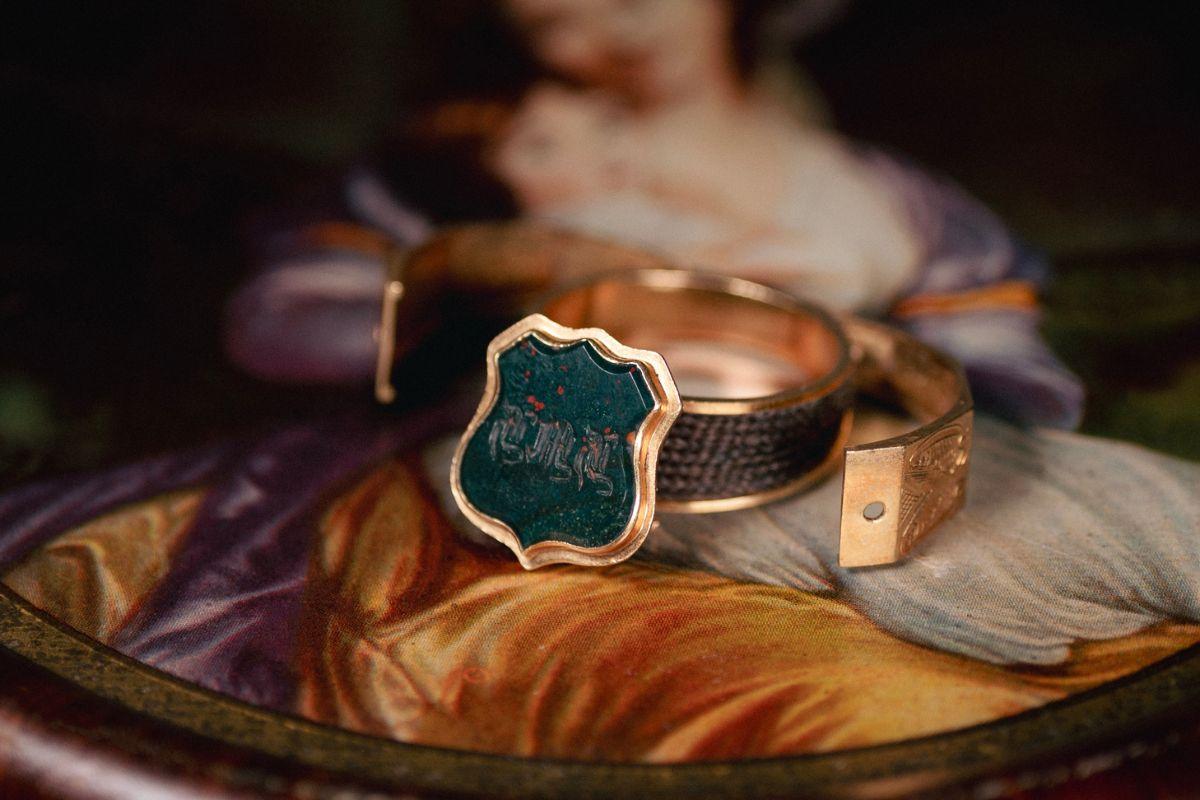
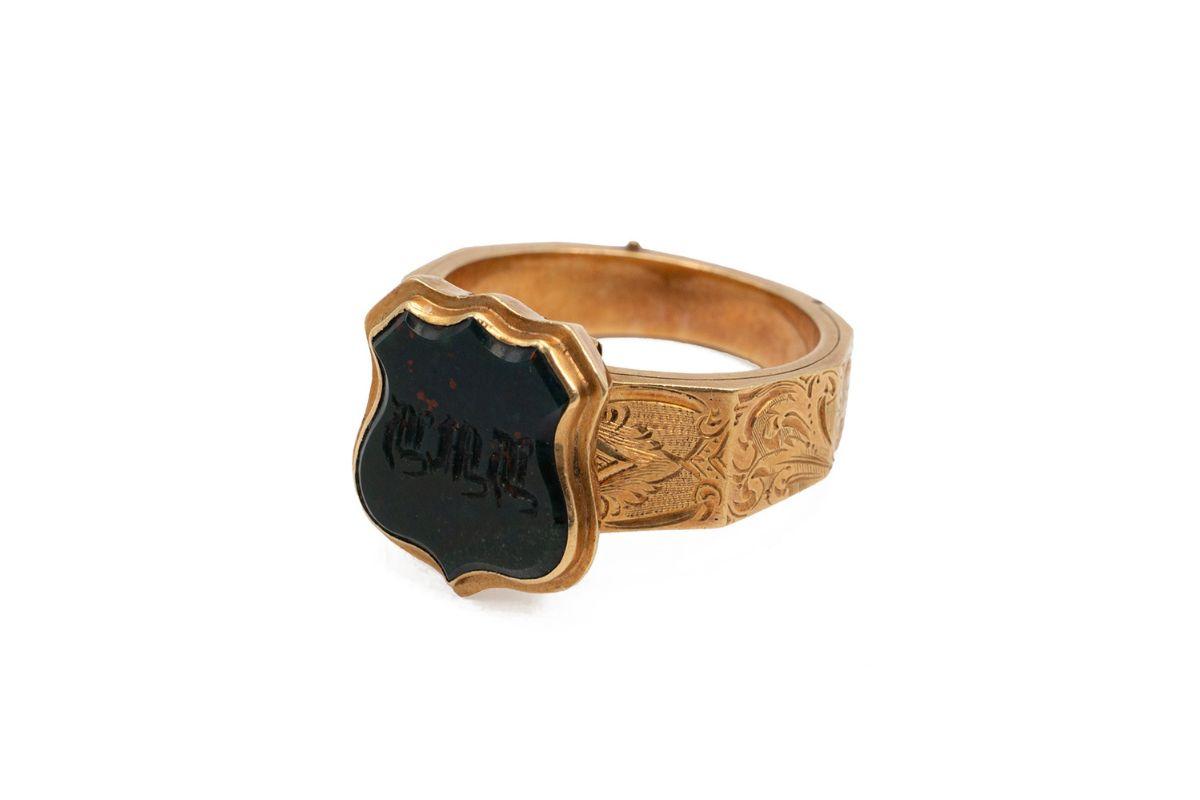
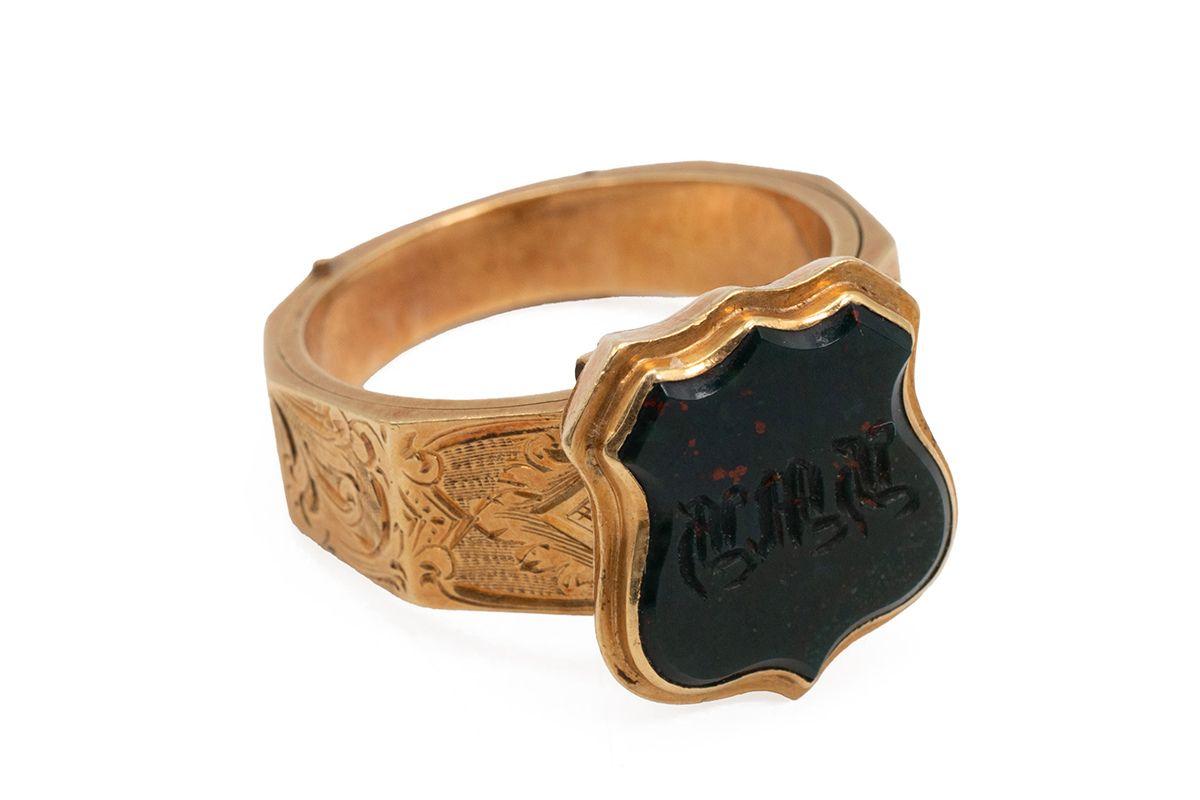
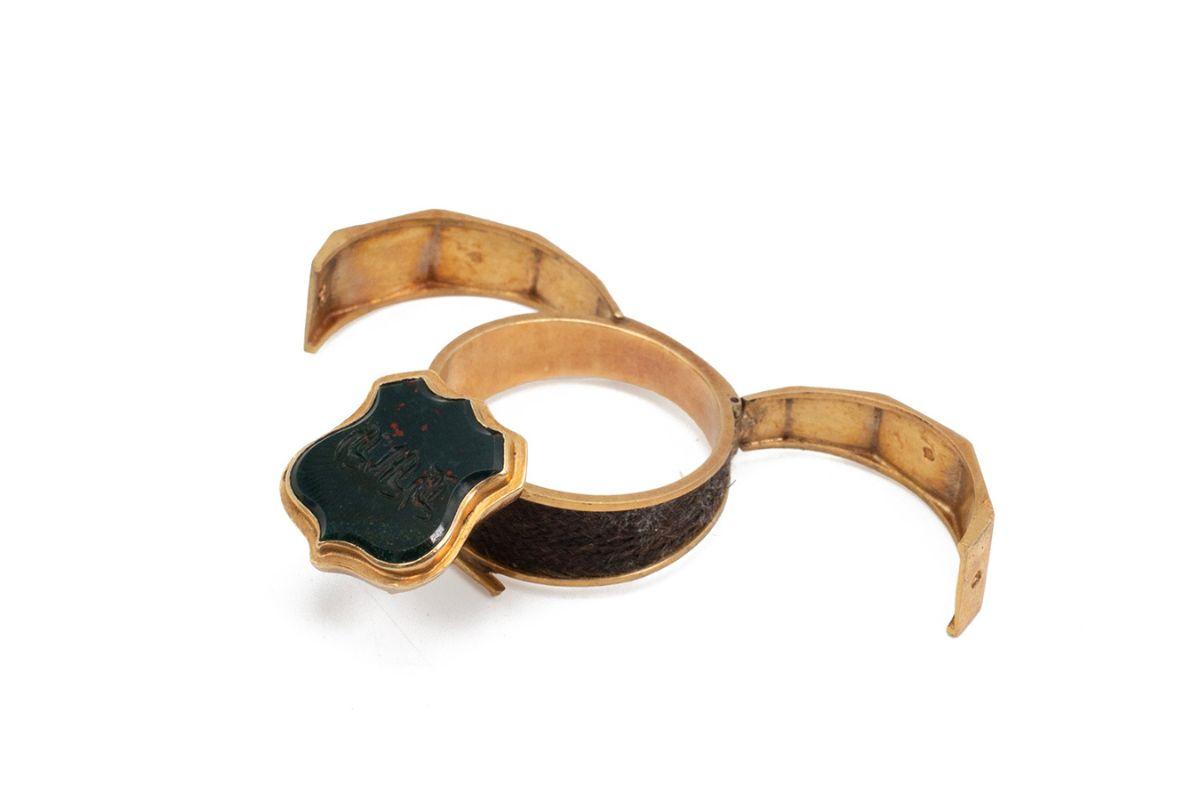
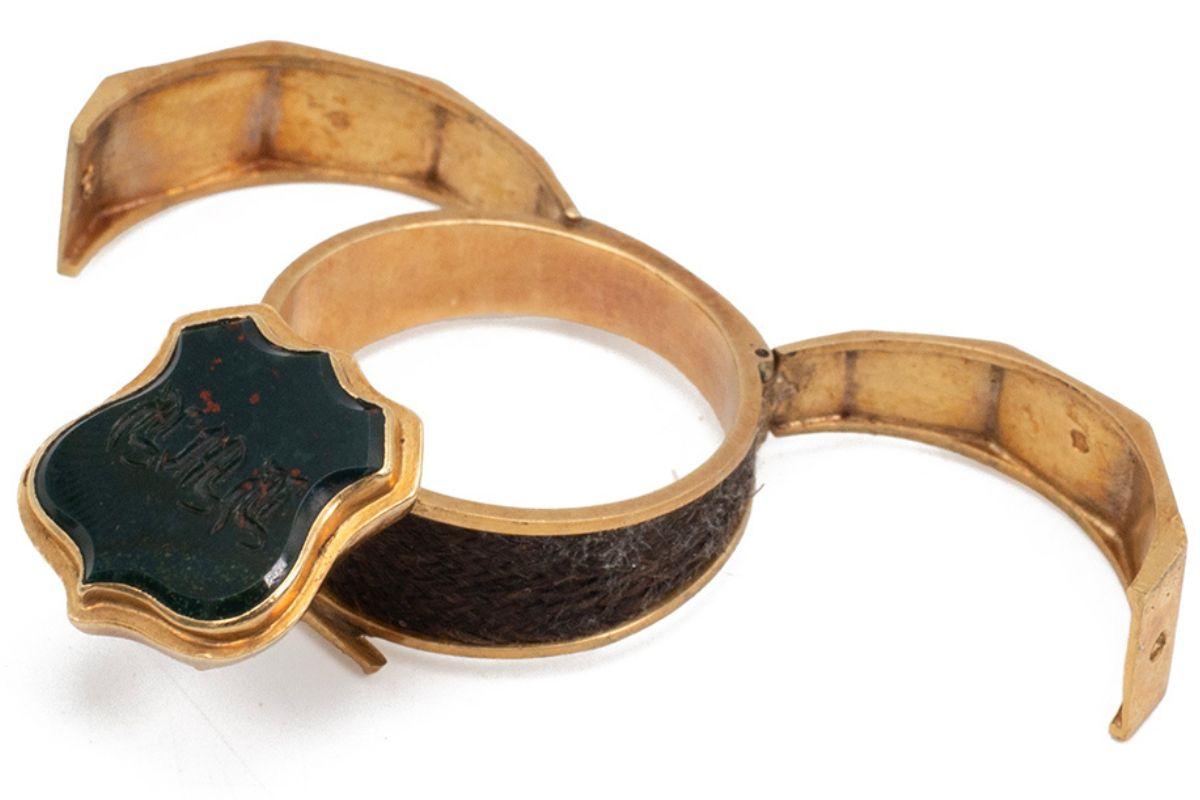
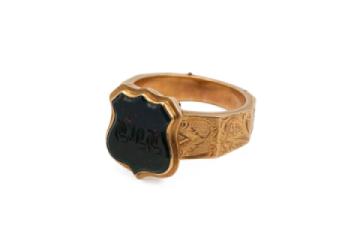
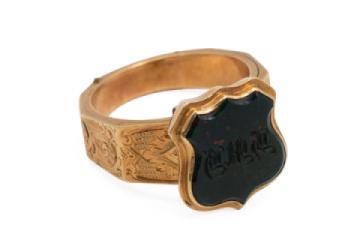
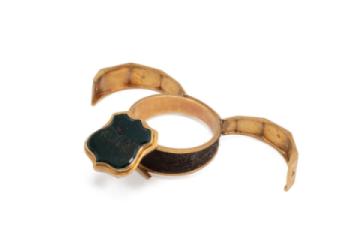
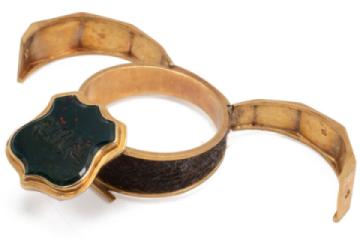
A 19th-century 18ct gold shield mourning ring, with decorative shield-shaped bloodstone on hinged mount and hinged shoulders enclosing a band of plaited hair. Size R 1/2, weight 9.2 grams. Continental hallmarks.
This unusual piece of highly collectable mourning jewellery is to be offered in our next Jewellery, Silver and Watches sale on Wednesday, 22nd April. Both the hinged shank and shoulders open up to reveal masterfully concealed intricately plaited hair running around the inside of the band, a truly unusual piece. This striking ring speaks to the ingenuity of Victorian-era design and the enduring human desire to remember.
As gold prices continue to rise, pieces such as this are increasingly at risk of being melted down, making surviving examples not only collectable but important artefacts of social and cultural history. This distinctive and evocative piece would make a compelling addition to any collection of fine mourning jewellery.
A Brief History Of Mourning Jewellery
Wearing tokens to remember lost ones is not a recent trend by any means; the evidence dates back to ancient times, where various pieces of jewellery and commemorative items were kept as keepsakes. What we understand by mourning jewellery today refers items from the Georgian and Victorian periods, where it reached its peak in popularity.
As early as the 15th- and 16th-centuries, memento mori pieces, bearing morbid symbols such as skulls and coffins, as well as hourglasses symbolising time running out, served as stark reminders of mortality. By the 18th century, during the early Georgian period, these motifs were still prevalent, but as time went on, mourning jewellery became simpler, featuring restrained, symbolic decoration, with rings in particular becoming more standardised, often inscribed with the name, age, and date of death of the departed (See Lot 126).
The 19th-century, marked the height of mourning jewellery's popularity. The Victorian era, shaped in part by Queen Victoria's prolonged mourning for Prince Albert, saw an increased demand for more elaborate and sentimental forms. Jewellery became softer in tone and more personal in nature, frequently incorporating the hair of the deceased, believed to embody their essence and endure beyond death as a powerful symbol of immortality. This ring, with its carefully preserved plaited hair, is a fine example of this Victorian sensibility: intimate, intricate, and deeply meaningful.
Death In Victorian Britain
To modern sensibilities, Victorian mourning practices can seem elaborate, even obsessive. Yet they were shaped by a world in which death was ever-present. With life expectancy around 40 to 45 years, and diseases such as cholera and smallpox widespread, loss was a frequent and familiar experience. High infant mortality and 'small wars' and conflicts across Europe and further afield further reinforced the proximity of death in daily life.
When Queen Victoria's husband, Prince Albert, died in 1861, she was deeply affected, entering an extended period of intense mourning that lasted for the rest of her life. She withdrew from public appearances and wore black almost constantly, setting a powerful example that influenced Victorian society. Her prolonged grief helped popularise mourning customs, especially mourning jewellery, which became increasingly elaborate and deeply personal.
Within this context, mourning jewellery provided a socially acceptable means of expressing grief. It allowed wearers to carry a tangible connection to the departed, transforming loss into something both visible and enduring. These pieces were not merely decorative; they were emotional anchors, and quiet declarations of love and remembrance.
How To Identify Mourning Jewellery?
Mourning jewellery was rich with coded messages and employed a rich symbolic language, transforming grief into wearable narratives. Earlier, more overtly morbid motifs gave way to gentler, more hopeful imagery.
Materials themselves carried meaning: jet and onyx signified mourning; black enamel conveyed grief, while white enamel was used to commemorate unmarried individuals or children. Seed pearls symbolised tears, and hair, as seen in this ring, represented both memory and eternal life.
Decoration also played a vital role. While earlier Georgian pieces focused heavily on morbid iconography - also referred to as memento mori - presenting as skulls and coffins, later pieces often featured urns or weeping willows. The urn motif reflects the 18th- and early 19th-century fascination with the art and culture of ancient Greece and Rome, when classical forms became widely adopted in decorative design. While rooted in this revival of antiquity, the urn also carried clear funerary associations and was a potent symbol of death, having historically been used to hold cremated remains. More commonly in a Christian context, however, it was understood as a vessel for the soul, awaiting resurrection. The weeping willow, with its gracefully drooping branches and tear-like leaves, similarly conveyed sorrow; its bowed form was often seen to reflect the heavy weight of grief itself.
Victorian designs became increasingly more elaborate and expanded into a broader visual vocabulary: flowers such as forget-me-nots spoke of remembrance; ivy suggested eternal life; lilies evoked purity and resurrection. Portraits of the deceased also featured in rings (see Lot 40), brooches and lockets, with earlier ones as painted miniatures and then later photographs. Personalised symbols such as books, anchors, or emblems of societies the deceased belonged to, including Masonic, could further individualise a piece, tying the memory of the deceased to their life and identity.
Sell Your Mourning Jewellery With RWB Auctions
If you are considering parting with a piece of period mourning jewellery, RWB Auctions offers a trusted and sympathetic route to finding it a new home where it can be appreciated and preserved. With a strong international client base, including the United States, where mourning jewellery remains highly sought after, we are well placed to connect your piece with the right audience.
We provide free, no-obligation valuations every Monday and Tuesday at our conveniently located high street offices, and our friendly, knowledgeable team will guide you through the process with care and professionalism. We also offer some of the lowest commission rates in the country, along with prompt payouts.
We understand that these pieces can carry deep personal significance and may be difficult to part with; our approach is always respectful and considerate, ensuring that each item is handled with the sensitivity it deserves before beginning its next chapter. Contact our office today on 01793 840777 or office@rwbauctions.com.