WW1 1916 Gold 15 Rupien
WW1 1916 Gold 15 Rupien
- Sale Date: 18th June 2025
- Estimated Price: 800.00
- Gavel Price: £800.00
Item Description
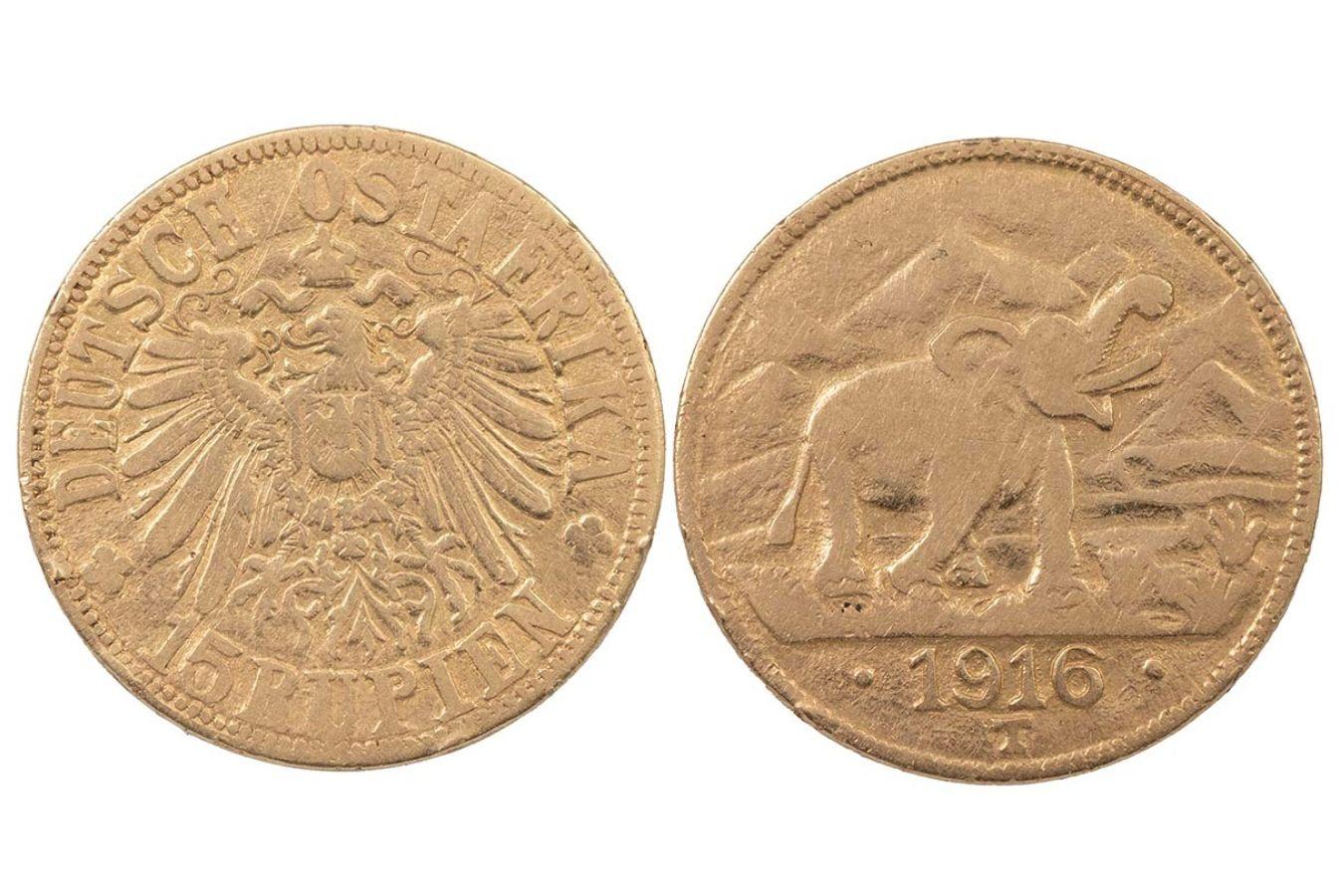
German East Africa, 1916 Wilhelm II gold 15 Rupien (KM 16.1). Obverse: crowned imperial eagle with 'DEUTSCH OSTAFRIKA' above and '15 RUPIEN' below, right arabesque ends below 'T' of 'OSTAFRIKA'. Reverse: elephant above date (1916) with 'T' below for Tabora mint. Weight: 7.1g. Mintage: 9,803. Grade: F - Fine.
One of the more unusual and compelling gold coins of the First World War period is the German East African 15 Rupien, struck in 1916 during the height of the conflict.
The Tabora Emergency Mint
These distinctive coins were struck in Tabora, in modern-day Tanzania, then part of German East Africa. Tabora became the capital of Deutsch-Ostafrika following the surrender of Dar es Salaam to the British. Moving the capital inland cut off the supply of gold and silver from the German Empire, making coin production in the colony difficult.
To keep the economy functioning and pay local mercenaries, the Germans established an emergency mint in an adapted train carriage. The mint was staffed by a local workforce, including seven Sri Lankan goldsmiths recruited in Dar es Salaam. The minting equipment was salvaged from SMS Königsberg, which had been sunk by the British in 1915.
The Tabora mint produced a range of copper and brass German East African coins, all marked with a distinctive 'T' mintmark, but the gold issues are by far the most sought-after.
Gold 1916 Elephant Coins
These 15 Rupien coins were struck from metal mined at the Kirondatal gold mine. While the 15 Rupien was intended to be similar in size and weight to a British gold Sovereign, a popular trader coin in Africa, the resulting issues were made of .750 (18-carat) gold. Surviving examples have a reddish tone due to their copper content.
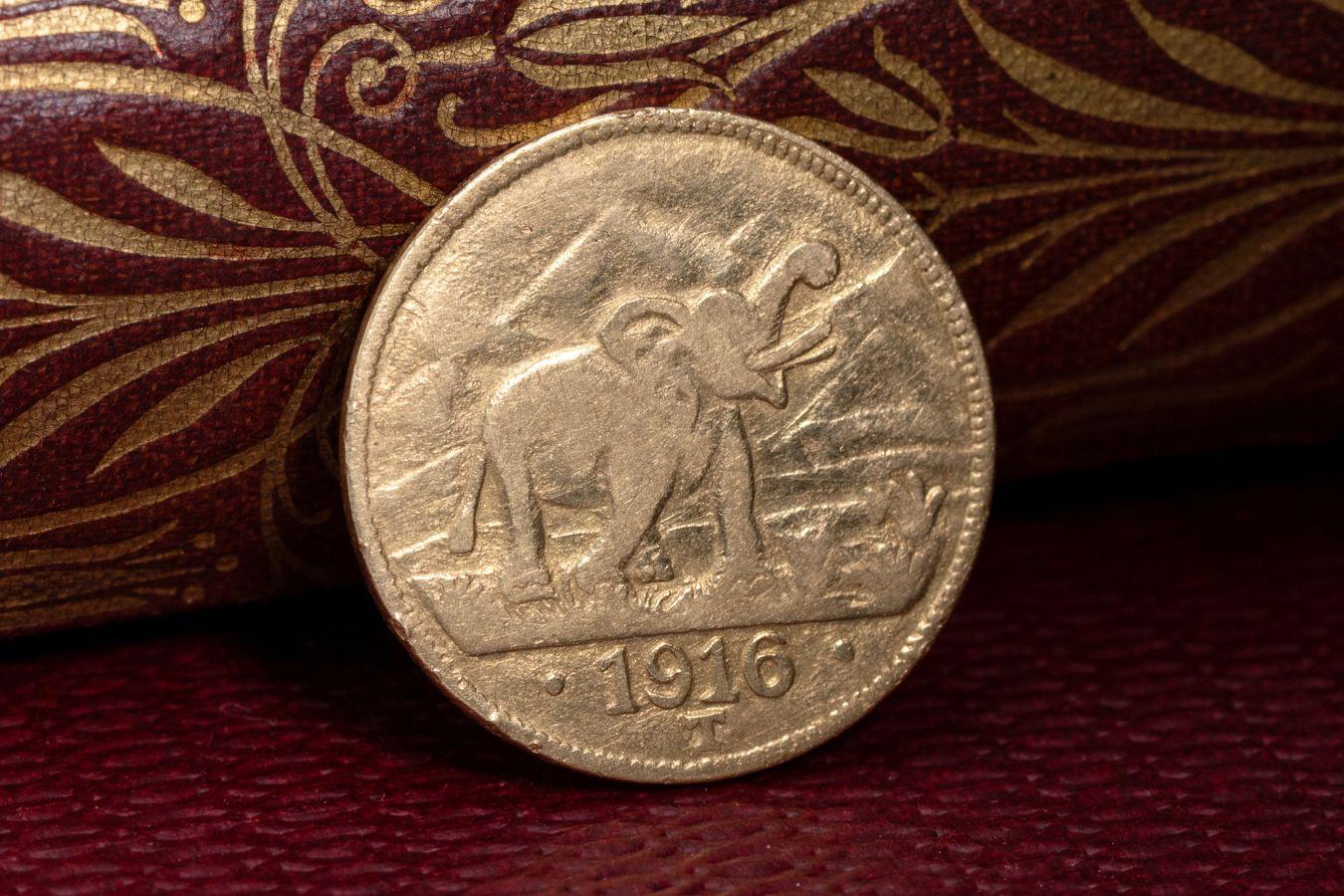
The distinctive trumpeting elephant reverse design of these coins was chosen because of the importance of the ivory trade to the East African economy, which led to these coins being referred to as 'Elephants'. The date (1916) appears below, along with the 'T' mintmark. The background is often said to depict Mount Kilimanjaro, but the dormant volcano is free-standing rather than part of a mountain range, as shown on the 15 Rupien.
The obverse shows the coat of arms of the German Empire, centred on the Imperial eagle, with 'DEUTSCH OSTAFRIKA' above and '15 RUPIEN' below.
A tiny detail on the obverse distinguishes the two types of 1916 15 Rupien:
- In the earlier issue, the arabesque at the top of the eagle's right-hand wing extends below the 'T' in 'OSTAFRIKA' (approximate mintage of 9,035), as on the example pictured above
- On later and scarcer issues, the arabesque curls under the 'A', (mintage 6,395)
The two different varieties are said to originate from the motif being engraved directly onto the dies rather than onto a master die. When the first broke, the second was engraved with a minor difference to the design.
Collecting German East African 15 Rupiens
The makeshift mint at Tabora was operational for only a short time before forces from the Belgian Congo captured the town in September 1916. This meant that few of these coins actually entered circulation, accounting for the number of examples that can be found in high grade. Deteriorating dies and challenging minting conditions explain the lack of sharpness and detail seen on many pieces from this issue, especially when compared with contemporary European coinage.
The majority of the approximately 16,000 gold 15 Rupiens struck at Tabora were melted down, with some taken as war souvenirs by Allied troops. In this regard, these German East African coins are similar to the sought-after South African 'Veld Pond'.
Like the Veld Pond, the 1916 15 Rupiens is a type of 'siege piece'. Also called 'money of necessity', siege coins are issued under emergency conditions when regular minting is impossible and are often made using improvised materials.
Today, 1916 German East African 15 Rupiens are a prized item for collectors of military and colonial coinage. It represents a unique blend of history, rarity, and geopolitical significance.