Top Pop 1953 Proof Threepence
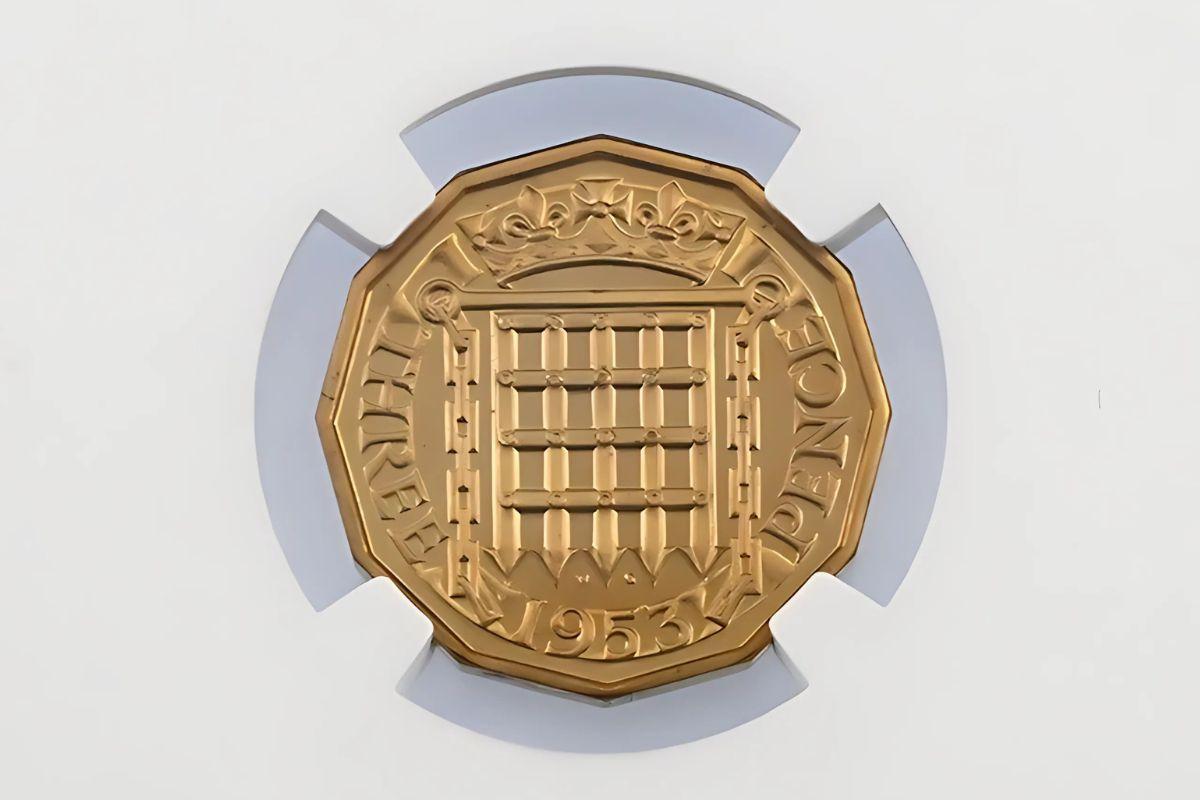
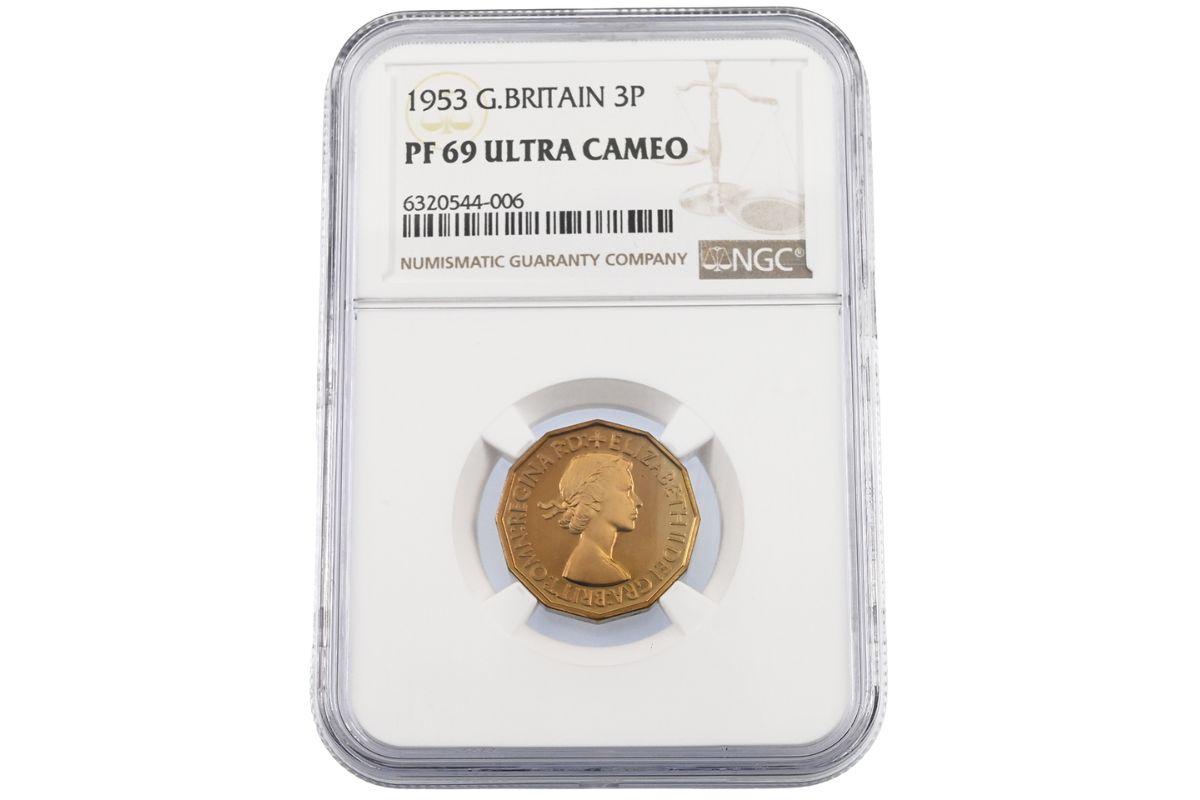
Top Pop 1953 Proof Threepence
- Sale Date: 14th February 2024
- Estimated Price: 50.00
- Gavel Price: £1,800.00
Item Description
1953 Queen Elizabeth II proof nickel brass Threepence, graded PF 69 Ultra Cameo by NGC (S 4152). Obverse: Mary Gillick's first definitive portrait of Elizabeth II, legend reads: '+ ELIZABETH II DEI GRA: BRITT: OMN: REGINA F: D:'. Reverse: crowned Tudor portcullis design with date (1953) below and 'THREE PENCE' on either side. Design: William Maving Gardner. Originally part of a 1953 specimen proof set. Comes in NGC holder (#6320544-006). Mintage: 40,000. Face value: 3d. Finish: proof. Composition: nickel brass. Weight: 6.8g. Diameter: 31.8mm.
A standout in RWB Auctions' 14 February 2024 sale, this superb Top Pop 1953 proof Threepence achieved a record £1,800. Graded PF 69 Ultra Cameo by NGC, it is the highest-certified example of its type and now holds the distinction of being the most expensive Elizabeth II Threepence ever sold.
The British Brass Threepence
The brass Threepence was a fixture of British pocket change from the 1930s through to decimalisation in 1971. Its distinctive 12-sided shape and golden hue made it instantly recognisable. Unlike the more common cupronickel coins of the period, the Threepence was struck in nickel-brass — an alloy of copper, zinc, and nickel — giving it both durability and its signature warm colour.
By the time Elizabeth II acceded to the throne in 1952, the Threepence was well established in circulation. The first of her reign's Threepences, issued in 1953, retained the familiar format but introduced a new youthful portrait by Mary Gillick on the obverse and a fresh reverse design showing a crowned portcullis by William Maving Gardner.
1953 Elizabeth II Proof Sets
To mark the debut of Queen Elizabeth II's coinage, the Royal Mint issued a limited number of proof sets in 1953, primarily for collectors and dignitaries. These sets commemorated the Queen's Coronation and have since become enduring symbols of a new Elizabethan era.
Typically housed in a burgundy case bearing a crowned royal cypher, the sets contained ten coins, ranging from a commemorative Coronation Crown to the bronze Farthing, including, of course, the brass Threepence. Each coin was struck to proof standard using hand-finished dies and polished blanks, producing a striking contrast between frosted designs and reflective fields.
The record-setting Threepence offered by RWB Auctions would originally have come from one such well-preserved 1953 proof set.
Read more: A Complete Guide to 1953 Elizabeth II Coronation Proof Sets
'Top Pop' 1953 Threepence
Coin grading by third-party services such as NGC (Numismatic Guaranty Company) has transformed modern numismatics, introducing objective benchmarks for condition and rarity. Among the most sought-after designations is 'Top Pop' — short for top of the population — indicating the highest-graded example known for a specific coin.
With its PF 69 Ultra Cameo designation, this 1953 Threepence currently sits at the top of the NGC population report for the issue; no other known examples have been graded higher. The 'Ultra Cameo' label indicates not only flawless surfaces but also exceptional contrast between mirrored fields and frosted devices: a feature especially prized among proof collectors.
This combination of visual brilliance, technical perfection, and historical relevance propelled the coin to a record-setting £1,800, far exceeding typical market expectations for the type.
Thinking Of Selling?
This record-breaking result is a clear reminder of the strong demand for high-quality British proof coinage, especially top-graded examples. Collectors and vendors are invited to consign similar coins to RWB Auctions' regular specialist sales, which continue to attract national publicity, competitive bidding, and impressive hammer prices.
With low seller's fees and a growing reputation for delivering exceptional results, now is the perfect time to offer your rare or graded coins to market.
Contact RWB Auctions' Coin Department today to discuss your consignment.
Further Reading
Dyer, G P, and P P Gaspar. 'Reform, the New Technology and Tower Hill,' in A New History of the Royal Mint, edited by Christopher E Challis. Cambridge University Press, 1992.
Farmer, Richard. ''That Alien, New-fangled, Thick, Intractable Dodecagon': The Design and Introduction of the 1937 British Threepenny Coin.' History Workshop Journal, Vol. 83 (Spring 2017): 194-216.
Linecar, H W A. British Coin Designs and Designers. G Bell & Sons, 1977.